What Does This Hand Gesture Mean in Khmer Dance? The Story of the Blooming Flower
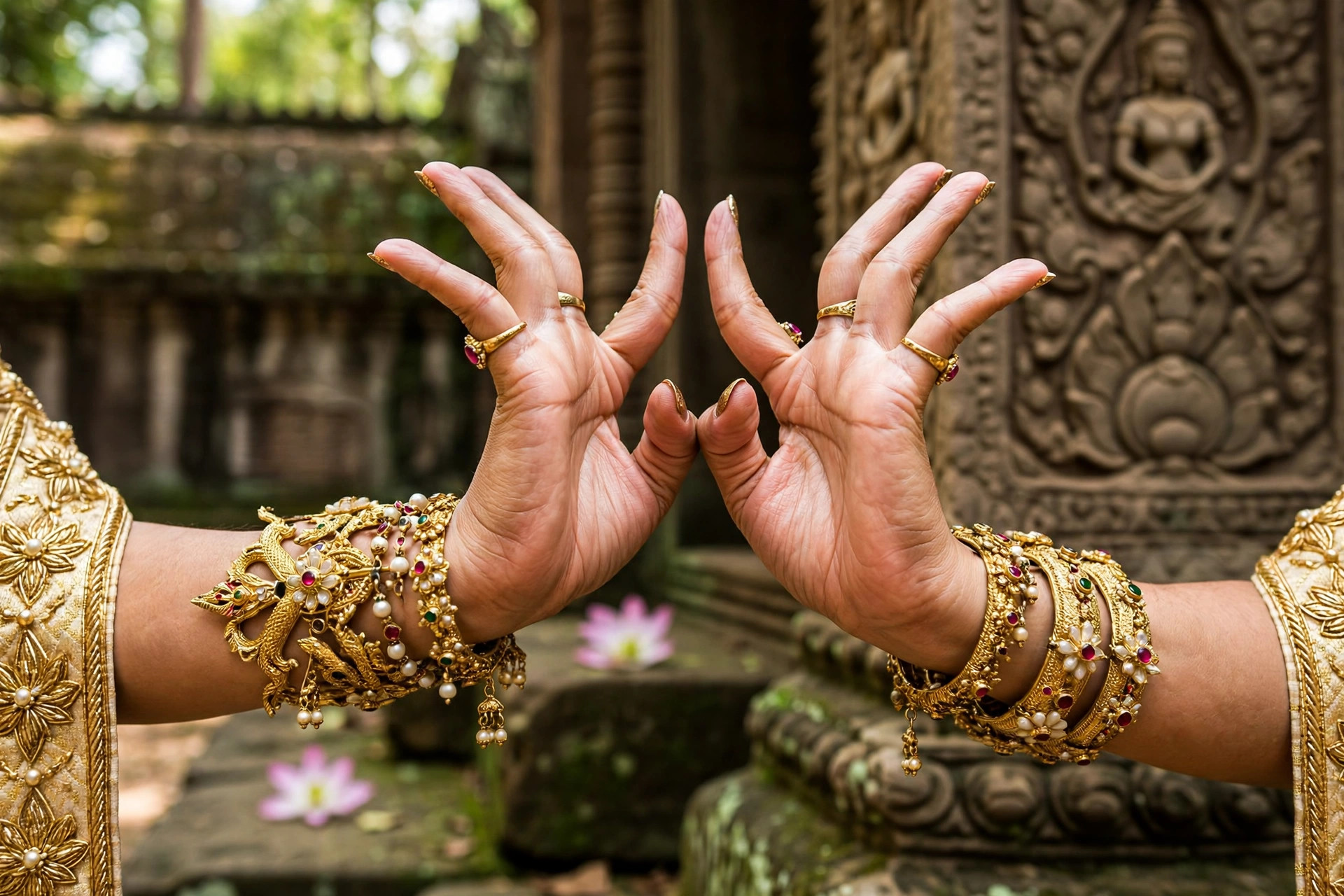
The blooming flower gesture in Khmer classical dance means a flower opening, full of life, beauty, and offering. It is often listed as kbach khoung, the flower gesture in the four main gestures of the dance, and it comes right after the young leaf in the story of a growing plant.
To see it, watch the hand open. The fingers bend back gracefully, like petals unfolding from a bud, and the wrist curves soft and round. Nothing is sharp or rushed. A good dancer makes the opening feel slow and alive, as if sunlight has just touched the flower and it is answering in its own time. Teachers may use slightly different names or spellings when they write Khmer words in English, and details can vary a little by school, so students learn most faithfully by watching their own teacher's hand.
This flower belongs to a sequence every young dancer knows in her body. First the tree, then the leaves, then the flower, then the fruit. The fruit falls, a new tree grows, and the cycle begins again. It is the cycle of life told without a single word: planting and growing, opening and ripening, letting go and beginning anew. In Cambodia, where rice fields, gardens, and riverbanks mark the seasons, that story is not abstract. It is daily life, lifted into art.
You will see the blooming flower again and again in classical pieces. In garden scenes, Apsara, the celestial dancers, move among blossoms, admire them, pick them gently, and offer them as a sign of grace and love. In blessing dances, flowers and petals carry good wishes for happiness and prosperity. When the hand opens as a flower near the heart, it can also carry feelings of joy, tenderness, and love, because in this dance the same gesture can speak of nature and of the human heart at once. Where the hand is placed, and how it moves, helps tell the audience which meaning is blooming in that moment.
That is why students practice the opening of the hand hundreds of times. The fingers must bend back without strain, the movement must stay smooth, and the flower must never look forced. Beauty here is not decoration. It is patience, training, and respect made visible.
Takeaway: the blooming flower reminds us that Khmer dance finds the whole cycle of life in one opening hand, from a young leaf to a blossom offered with love.
Next in this series, meet the ripe fruit, and see how the flower's story comes to fullness in the dancer's palm.
Watch more Khmer culture, dance, and stories on the Samnang Bradley YouTube channel: https://youtube.com/@samnangbradley