What Does This Hand Gesture Mean in Khmer Dance? The Story of the Ripe Fruit
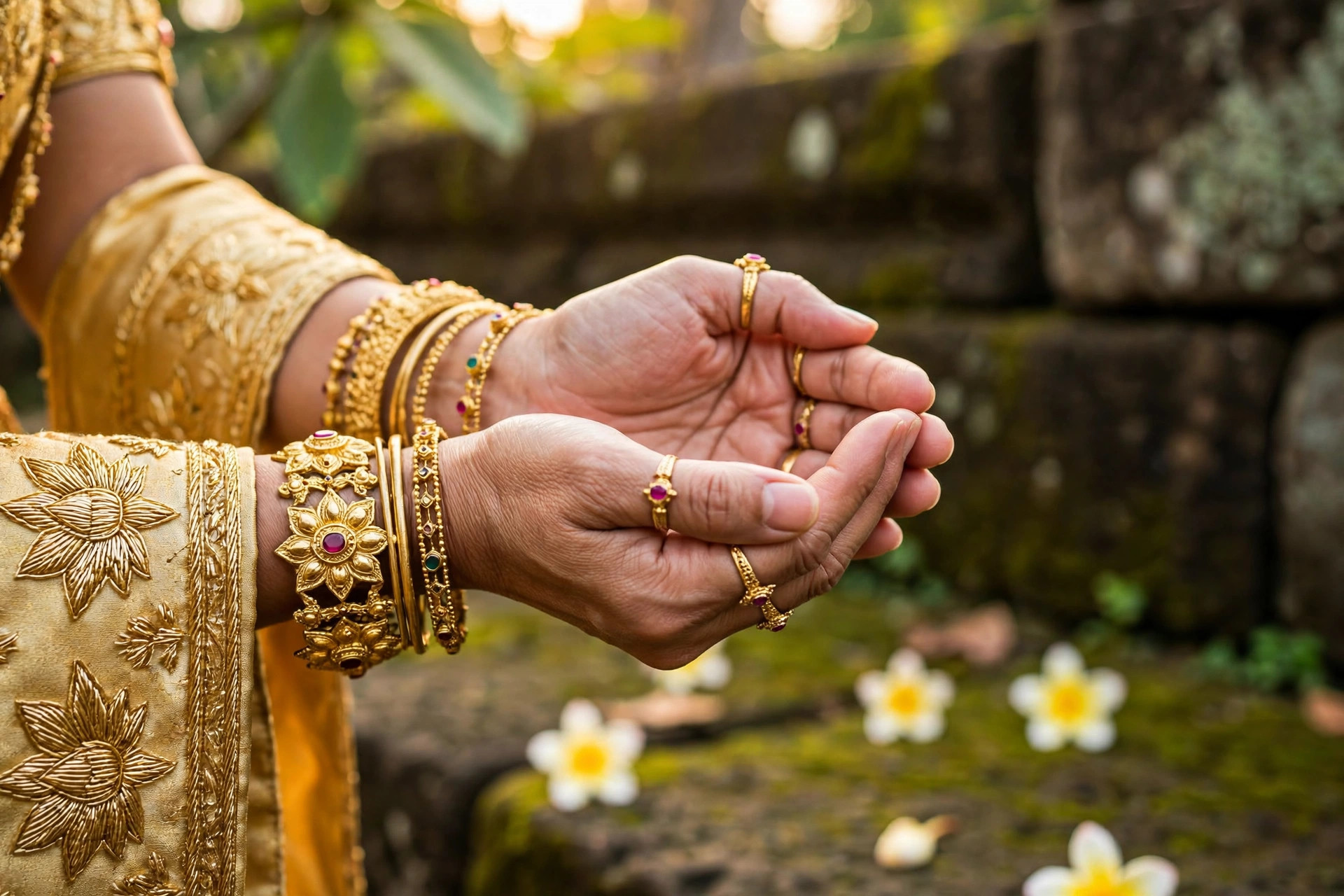
The ripe fruit gesture in Khmer classical dance means fruit that has grown full and ready, the moment of ripeness, harvest, and offering. It is called kbach chang-ol, the fruit gesture in the four main gestures of the dance, and it comes last in the story of a growing plant, after the tree, the leaf, and the flower.
To see it, watch the hand become round and full. The fingers gather and curve softly, as if the palm is holding something precious and ripe, and the wrist stays graceful and calm. Nothing is squeezed or hurried. A good dancer makes the fruit feel heavy with life, ready to be picked with care and gratitude. Teachers may spell the Khmer name a little differently in English, sometimes chang-ol and sometimes changol, and small details can vary by school, so students learn most faithfully by watching their own teacher's hand.
This fruit completes a sequence every young dancer knows in her body. First the tree, then the leaves, then the flower, then the fruit. The fruit ripens, falls, and its seed begins a new tree, and the cycle starts again. It is the cycle of life told without a single word: planting and growing, opening and ripening, letting go and beginning anew. In Cambodia, where mango trees, banana groves, and rice fields mark the seasons, that story is not abstract. It is daily life, lifted into art.
You will see the ripe fruit again and again in classical pieces. In garden scenes, Apsara, the celestial dancers, admire the fruit, pick it gently, and offer it as a sign of gratitude and blessing. Fruit has long been an offering in Khmer life, placed with care at celebrations and at the pagoda, and the dance carries that same respect in the hands. When the hand rounds as fruit near the heart, it can also carry feelings of fullness, love that has matured, and joy that is ready to be shared, because in this dance the same gesture can speak of nature and of the human heart at once. Where the hand is placed, and how it moves, helps tell the audience which meaning is ripening in that moment.
That is why students practice this rounding of the hand hundreds of times. The fingers must stay soft, the shape must stay full, and the fruit must never look forced. Beauty here is not decoration. It is patience, training, and respect made visible, from the first leaf to the final harvest.
Takeaway: the ripe fruit reminds us that Khmer dance finds the whole cycle of life in one rounded hand, and that everything grown with patience is meant to be offered and shared.
Next in this series, meet the tree itself, and see where this whole living story takes root.